Knife River Indian Villages National Historic Site
- Sacagawea, the Shoshone girl who accompanied Lewis and Clark on their explorations to the American West, lived in one of the Hidatsa villages. It was there that the explorers hired her to serve as a translator for the Corps of Discovery.
- The Knife River villages thrived from the early 1500s until 1837 when a series of smallpox outbreaks – spread through the trading network – nearly wiped out the populations.
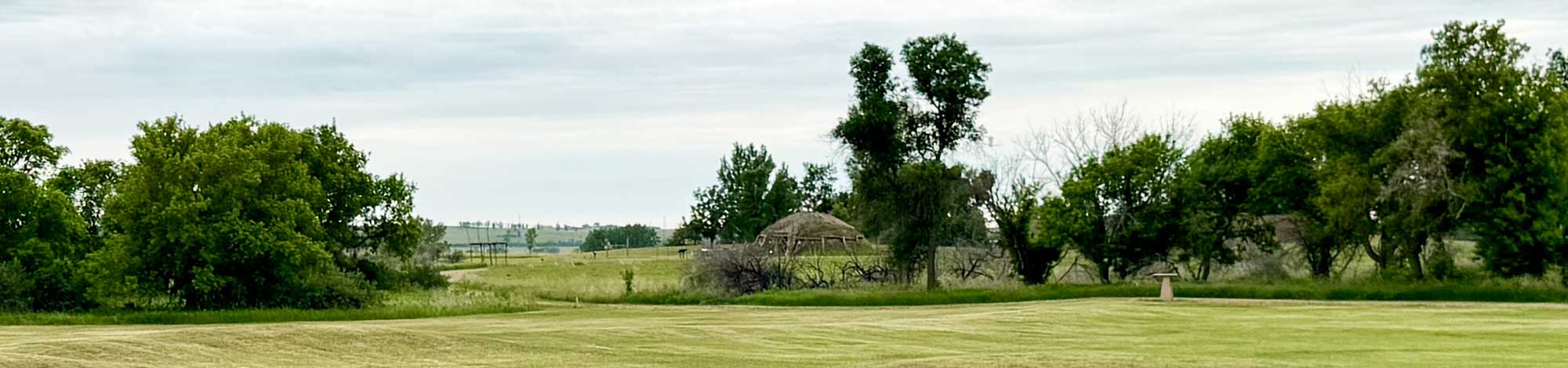
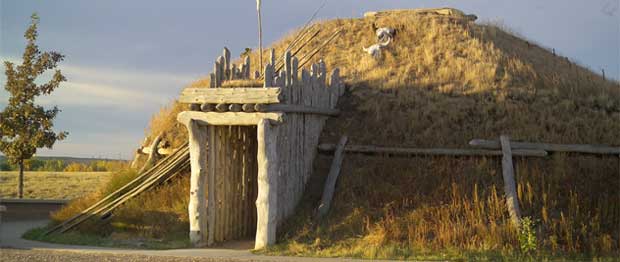
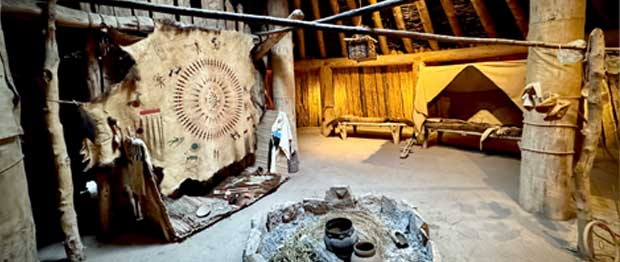
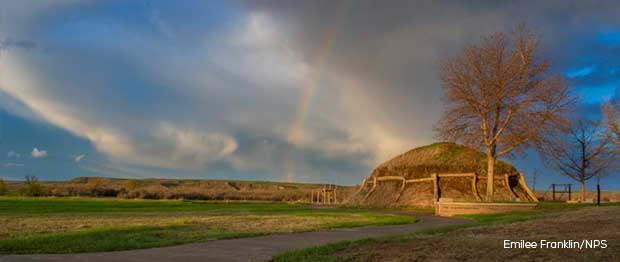
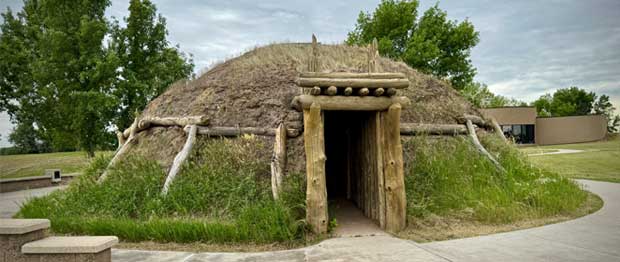
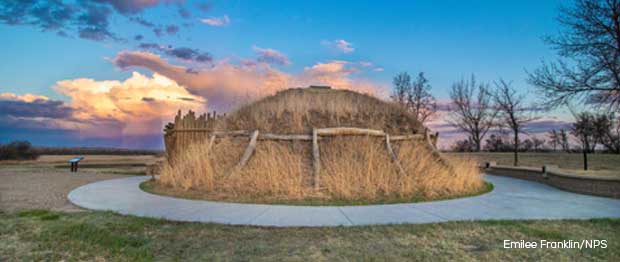
Knife River Indian Villages National Historic Site was established in 1974 to protect and interpret the remains of Mandan and Hidatsa earthlodge villages in central North Dakota. These Indigenous communities built round earthlodges on terraces overlooking the Knife and Missouri Rivers, where they farmed corn, beans, squash, and sunflowers; hunted bison; fished; and traded. The villages served as a major agricultural and trading hub, part of a broad network that reached across the Great Plains, north into Canada, west toward the Rocky Mountains, and south toward the Gulf Coast.
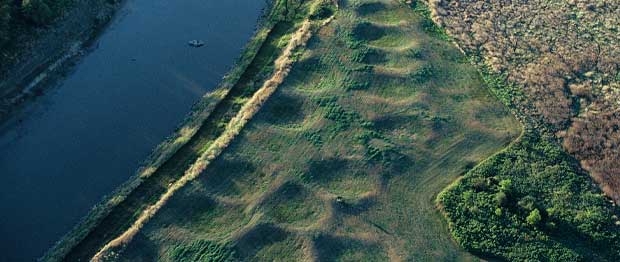
The park contains the remains of three large village sites. Earthlodges could measure roughly 40 feet across and often housed extended families. At the height of village life, lodges stood close together in thriving communities of farmers, traders, hunters, and craftspeople. Today, beyond the park’s reconstructed earthlodge and interpretive features, the most visible remains are depressions and midden mounds that only hint at the vibrant cultures that once flourished there.
Today, these villages remain places of profound spiritual, cultural, and archeological importance.
What JNPA Does Here
JNPA is the park’s official non-profit partner. Our on-site park store will offer educational products that help enrich visitors’ understanding of the site. Proceeds from product sales benefit the educational programs of the park.
Park Highlights From Our Blog